Stopped lines
One critical machine failure can halt an entire line while it waits for repair.

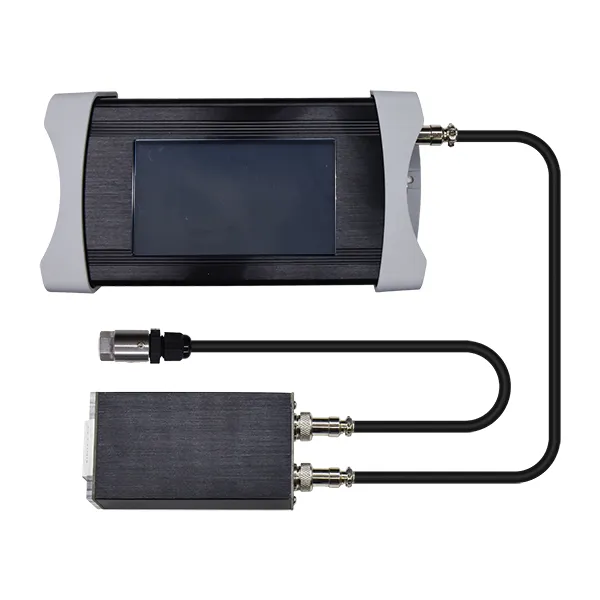
Vibration sensing and Edge AI analyse machine condition right at the equipment — moving you from fixing breakdowns to fixing what needs fixing.
One critical machine failure can halt an entire line while it waits for repair.
Lost production time squeezes schedules and customer trust.
Small faults left alone often grow into bigger, costlier failures.
A healthy machine has a stable vibration signature. When parts wear, loosen or shift, vibration usually changes before temperature rises or the machine stops.
Continuous monitoring and spectrum analysis reveal problems before they grow, so maintenance can be scheduled at the right time.
Uneven mass distribution in fans, turntables and rotors.
Couplings or shafts out of line, adding load and wear.
Loose base bolts, bearing housings or structures.
Worn races or rolling elements — the most common fault source.
Tooth wear, broken teeth or poor meshing.
Running speed near a natural frequency amplifies vibration.
Vibration sensors
Accelerometers capture real vibration at key machine points.
On-device analysis
Spectrum analysis runs locally — no need to stream raw data to the cloud.
Anomaly detection
Thresholds and models evaluate condition and trends.
Maintenance decisions
Instant alarms and trends, with FDC / MES integration.
Analysis at the machine means alarms the moment something changes.
Send results, not large volumes of raw vibration data.
Add monitoring points machine by machine.
Vibration data never has to leave your plant.
As an official ASUS IoT partner, INIKI provides software deployment, sensor installation and system integration.
Vibration analysis and predictive maintenance software that tracks equipment health and degradation.
Signal anomaly detection software that flags patterns different from normal operation.
Industrial wireless vibration sensor for fast, cable-free deployment.
Understand equipment, failure history and goals.
Choose sensors and locations, wired or wireless.
Install and collect normal-operation data as a baseline.
Go live with alerts and tune using real data.
Lightweight accelerometers with multi-channel acquisition convert vibration to velocity and voltage output, keeping plant equipment condition visible.
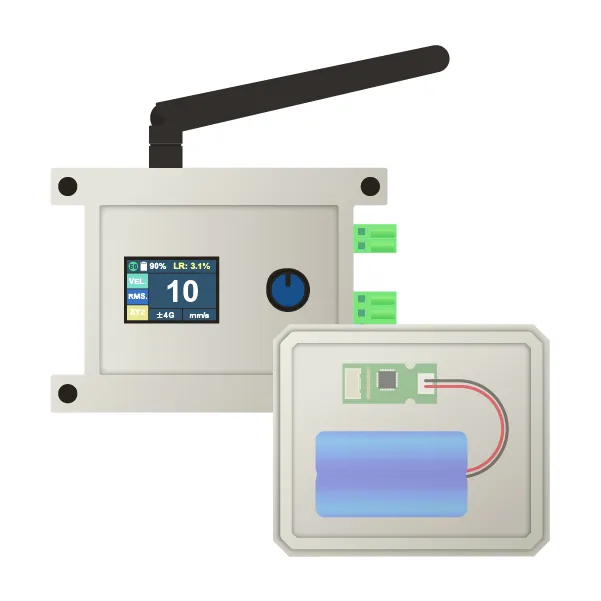
Vibration data sent over a 2.4 GHz RF link with about 90 days of battery life, so machine condition is always visible.
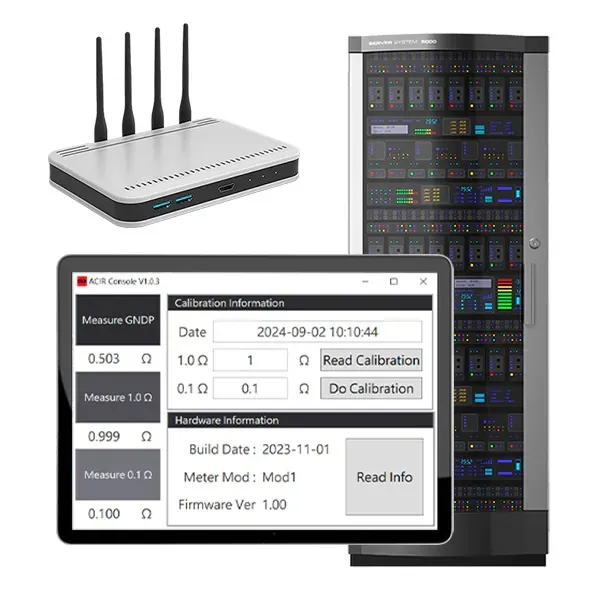
Wireless relays capture equipment power signals and show up to 32 machines on one HMI, with instant alarms on abnormal status.
Tell us about your machines and our engineers will plan the right vibration monitoring setup.